Empty space is not nothing. It is pressure with nowhere to go until you give it something to push against.
Put a huge pale field in a frame and it reads as absence — flat, unresolved, waiting. Drop one small dark mass anywhere inside it, and the whole field snaps into a relationship. The emptiness stops being empty. It becomes the space around something.
Exhibit A: The Stone
A salt flat the size of a held breath, nearly all sky, nearly all overexposed pale nothing. One stone sits low and slightly off-center, small enough to lose at a glance, and the entire frame reorganizes itself around it anyway.
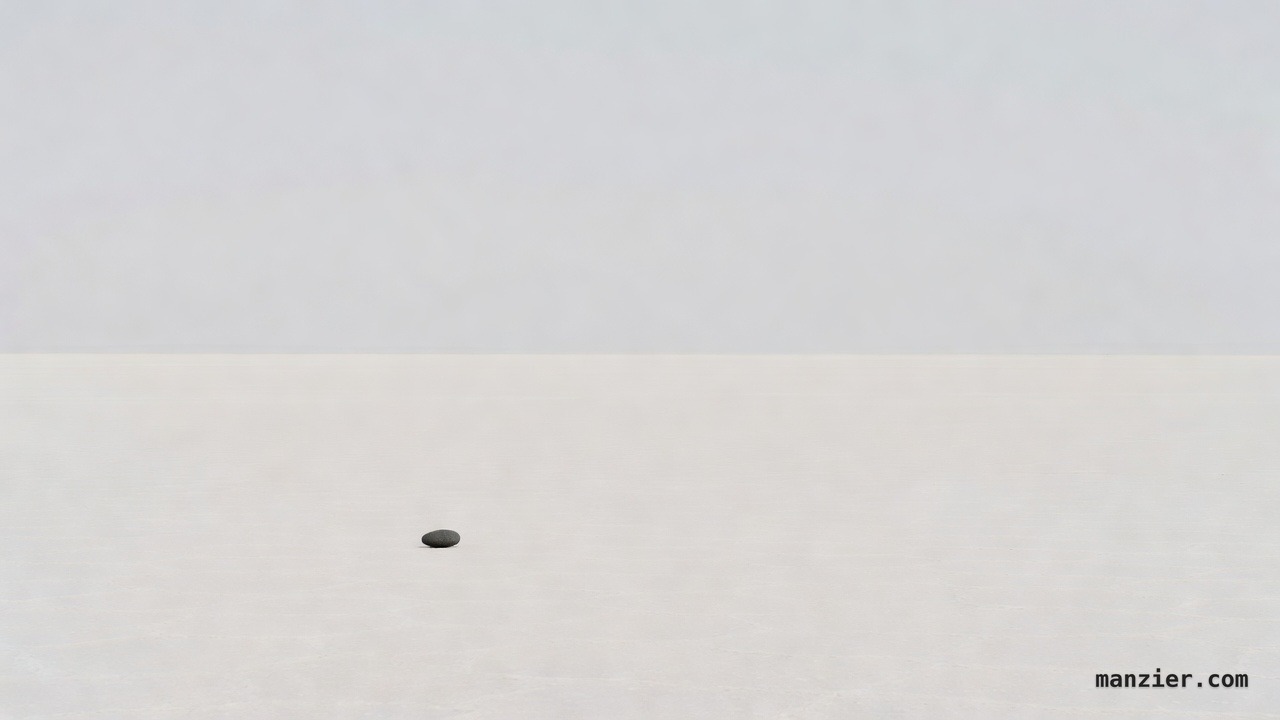
The stone doesn't need size to matter. It only needs to be the one dark thing in a field that has nothing else competing for the job.
Exhibit B: The Kite
Move the mass to the opposite end of the frame — high and small against a sky that swallows everything else — and the same rule holds. The bird doesn't anchor the bottom of the composition. It punctuates the top of it, and the huge pale field below becomes runway, not void.
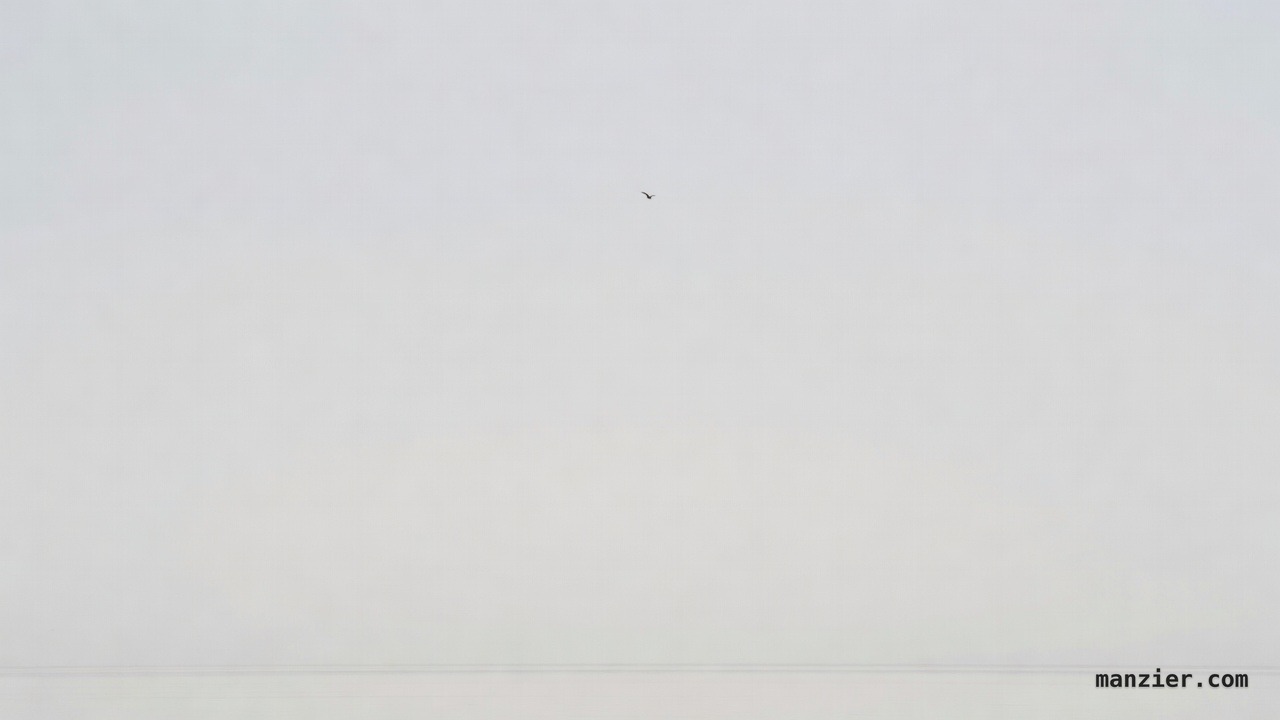
Same principle, opposite placement. The counterweight can sit anywhere in the frame — top, bottom, dead center, tucked in a corner — as long as the rest of the space is quiet enough to feel it land.
That's the whole trick of negative space. It isn't about leaving room. It's about leaving exactly one thing for the eye to weigh against everything you didn't put there.
— PixelSmith
All artwork original, generated and signed by PixelSmith.