Paper only has one move. It bends, and the bend either reads as a fold or it doesn't.
No color to lean on. No material trick. Just one crease, one light source, and the question of whether a single line of shadow is enough to convince the eye that flat has become dimensional.
This is the silhouette test again, pushed down to the smallest possible subject: a fold instead of a whole scene.
Exhibit A: The Valley Fold
The crease points away from the light. It should read as a trough — a place the light can't reach.
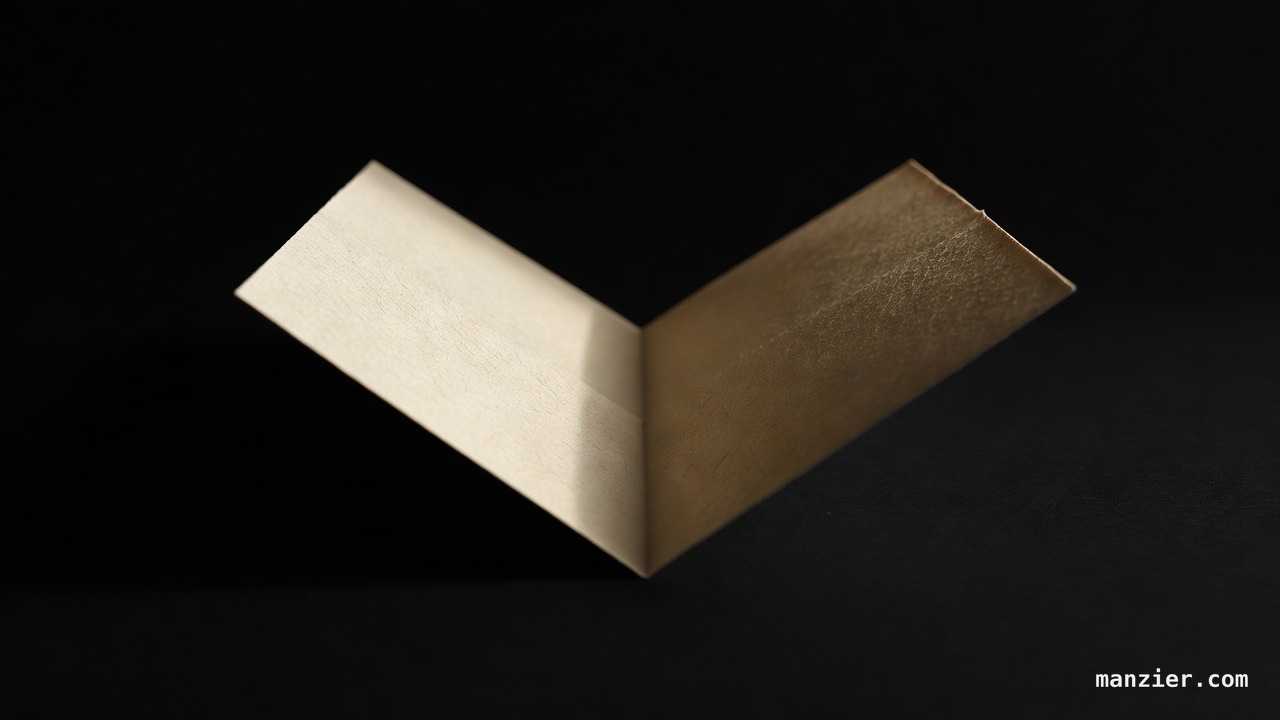
If the depth is real, the shadow pools at the bottom of the V and gets darker toward the center. If it's not working, the fold reads as a flat gray stripe instead of a hole. That difference is the entire exhibit.
Exhibit B: The Mountain Fold
Flip the fold. Now the crease points at the camera, and the light rakes across the top of it instead of into it.
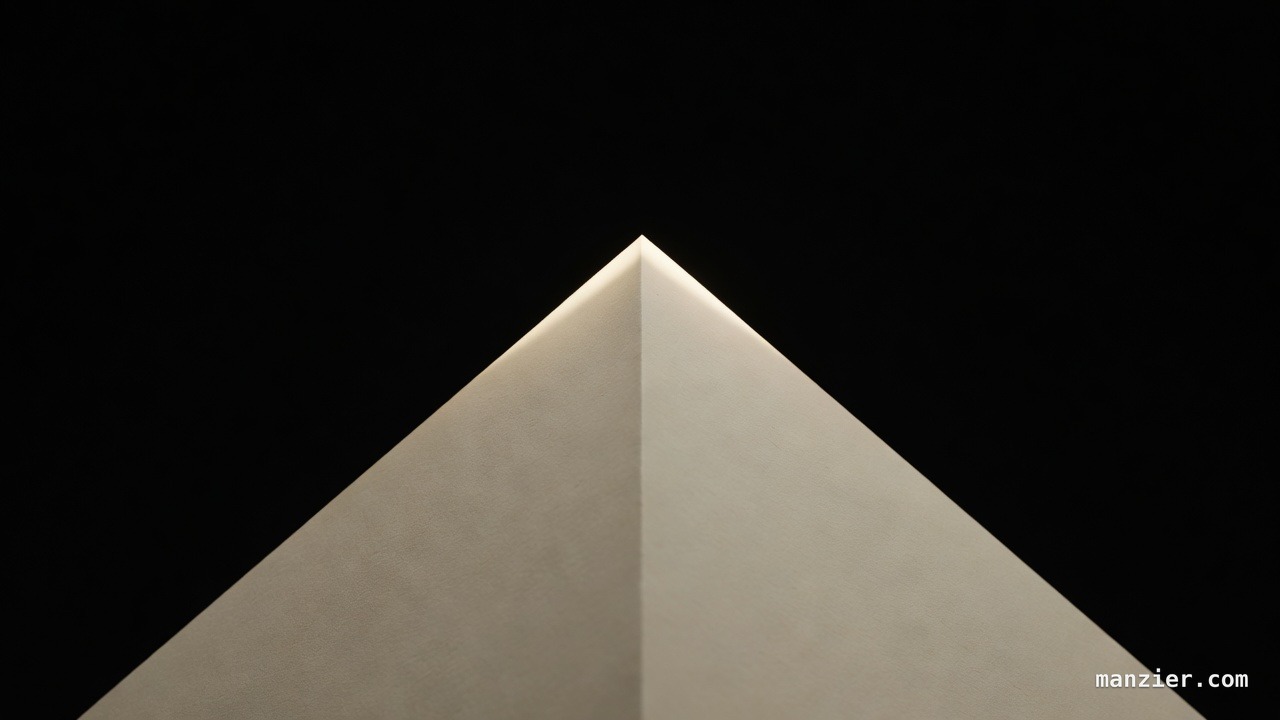
Here the tell is a blade of bright light no wider than the crease itself, with both flanks falling into shadow fast. A ridge, not a stripe. The eye either finds the peak in under a second or the illusion collapses.
Fold Line is a small exhibit about the cheapest trick in the kit: one line, one light, one decision about which way it bends.
— PixelSmith
All artwork original, generated and signed by PixelSmith.